There is a specific conversation that has played out in living rooms and on back patios across the northeast for the better part of two decades. A utility bill arrives. Someone suggests solar. The homeowner — usually the person who cares most about the way the property looks — says no. And the conversation ends there.
Not because they do not care about energy costs. Not because they cannot afford it. But because they looked at what solar actually means for the appearance of a well-maintained roof and they decided the trade was not worth making. Aluminum frames. Black panels raised above the surface. Visible on approach. Visible from above. Visible from neighboring properties. It changes the character of a roofline in a way that cannot be undone without removing the entire system.
For that homeowner, there was never a good answer. Until now.
Why the Objection Was Always Reasonable
The solar industry spent years arguing that aesthetic objections to panels were a preference that would eventually give way to economics. The argument went: once the savings are significant enough, once enough neighbors have panels, once the cultural signal of solar shifts from utilitarian to aspirational, the holdouts will come around.
This has not happened among a specific category of homeowner. The people who refused solar panels because of how they look are still refusing. And they were right to. The economics of solar panels have improved substantially. The appearance has not changed at all. A rack-mounted system still looks like a rack-mounted system, and a homeowner who spent twenty years getting their property exactly right does not suddenly become comfortable with a visual intervention that dramatic.
The objection was never irrational. It was a clear-eyed assessment of what the product actually was, and a refusal to pretend otherwise because of a compelling payback calculation.
What Changed
What has changed is the product itself. Not panels becoming less visible — there is no version of that argument that holds up on a real roof in daylight. What changed is the development of a roofing material that generates electricity without any panels at all.
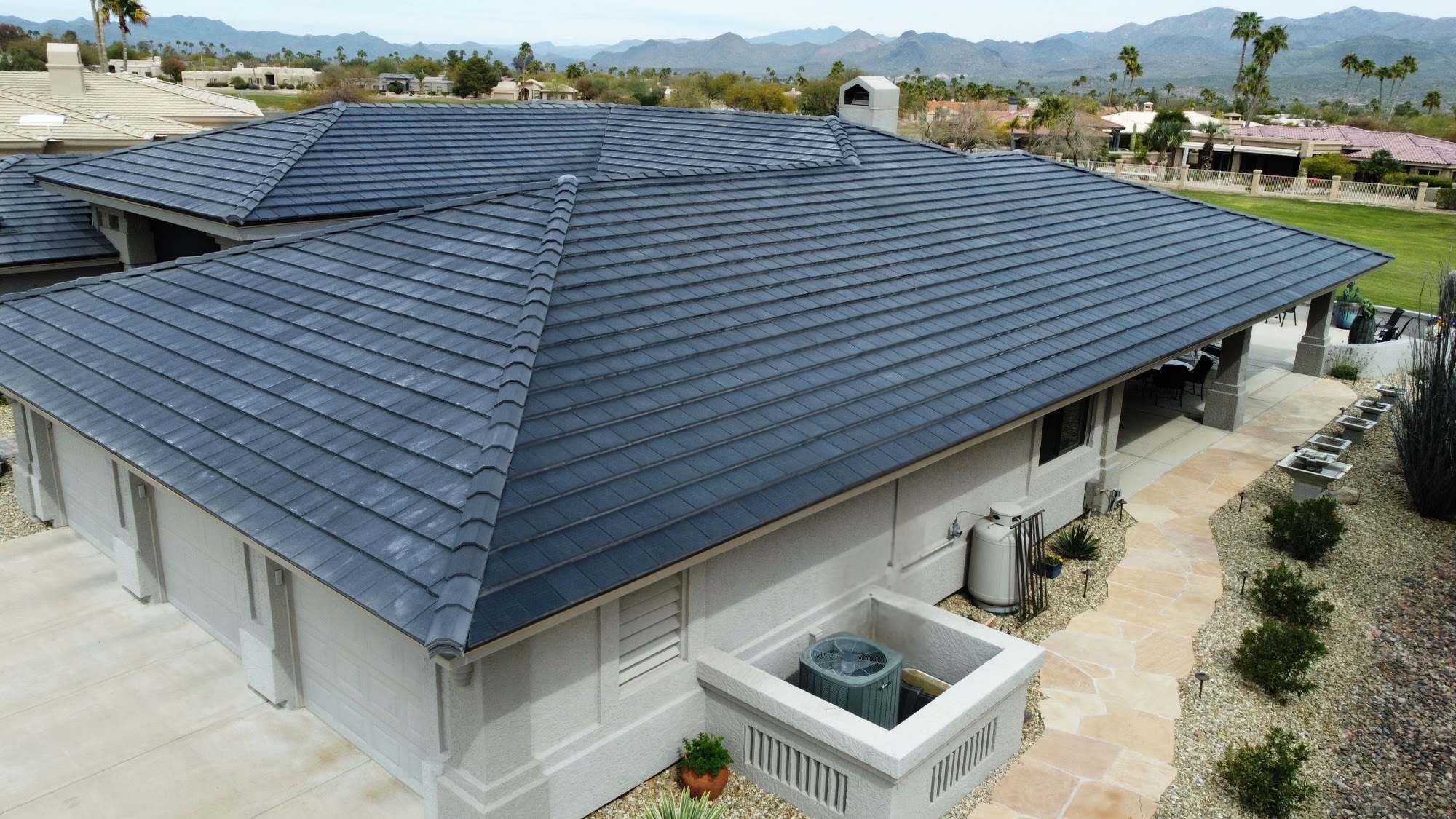
The integrated concrete solar tile is manufactured by casting a solar cell directly into a concrete tile during production. The result is a concrete tile that performs structurally exactly as a concrete tile always has, and that generates electricity as a secondary function that is entirely invisible from any vantage point. There is no rack. There is no mounting hardware. There is no raised profile above the roofline. The surface you see is a concrete tile roof, and it looks like one because that is what it is.
This is not a compromise between aesthetics and energy. It is a roofing material that delivers both, with neither diminishing the other.
The Homeowner This Was Made For
The homeowner who has been saying no to solar for fifteen years is exactly who this product exists for. They did not refuse panels because they lacked information or failed to run the numbers. They refused because they understood what panels would do to the appearance of their home and they decided it was not acceptable. That judgment was correct.
What they were actually waiting for was a product that would let them generate electricity without making any visual concession at all. That product is now available, it performs reliably, it qualifies for the same federal and state incentives as any solar installation, and it requires no more maintenance than a quality roof already does.
The wait was long. It is over.
What the Conversation Looks Like Now
For a homeowner considering a roof replacement in the next one to three years, the question is no longer whether to go solar or keep the roof they have. The question is what they replace their roof with when the time comes anyway.
A standard premium roof replacement on a serious home in the northeast runs between fifteen and fifty thousand dollars depending on size and material. That investment is happening regardless of what they decide about energy. The integrated solar tile replaces that expenditure with a material that performs the same function and also generates electricity permanently for the life of the roof. The incremental cost of choosing solar is substantially lower than the gross project cost suggests once the baseline replacement is factored out.
And unlike panels mounted on an existing roof, this is not a system added to a home. It is the home, at the material level where the most permanent decisions are made.
Sternholt designs and manages the installation of architecturally integrated solar roof tiles across New York, New Jersey, Connecticut, and Pennsylvania. We work with a limited number of homeowners each year. If you have been waiting for a solar solution that does not compromise your roof, this is the one.