Most homeowners do not think about their roof until something goes wrong with it. And when the time comes to replace it, the conversation typically follows the same path — shingle manufacturer, color selection, installation date. The decision is made in the same amount of time it takes to choose a paint color, for a surface that will define the look of the home for the next three decades.
A specific type of homeowner is approaching this decision differently. Not because they distrust the standard process. But because they have learned that there is a materially different option available to them, and once they understand what it actually is, going back to the standard process becomes difficult to justify.
The Problem with Shingles Is Not Performance
Asphalt shingles work. They protect a home from weather, they last twenty to thirty years, and they are available in a range of profiles that approximate the look of more expensive materials at a fraction of the cost. For the right home and the right homeowner, they remain a perfectly reasonable choice.
The issue is not performance. It is what shingles cannot do. A shingle roof, no matter how well specified or installed, is a passive surface. It sheds water and it ages. It does not generate electricity, and it does not improve with time the way slate or clay tile does. It is a replacement, not an investment in the architectural character of the property.
For a homeowner who cares deeply about that character — who chose their home for what it is rather than what it cost — this starts to feel like an incomplete answer to the question of what the roof should be.
What the Roof Replacement Moment Actually Represents
Here is the thing most homeowners do not realize when the roof replacement conversation begins. The expenditure is happening regardless. A quality roof replacement on a serious home in the northeast runs between fifteen thousand and fifty thousand dollars or more, depending on size and complexity. That money is leaving the account whether or not the new roof generates electricity.
The question is not whether to spend that money. The question is what to buy with it.
A standard shingle replacement buys a new roof with a useful life of twenty-five to thirty years. An integrated solar roof tile installation buys a new roof with the same lifespan that also generates electricity permanently and invisibly for the life of the material. When the decision is framed this way — as a replacement plus a permanent energy system in one material, at one cost — the calculus changes significantly for the homeowner who can see past the gross project number.
What Solar Roof Tiles Actually Are
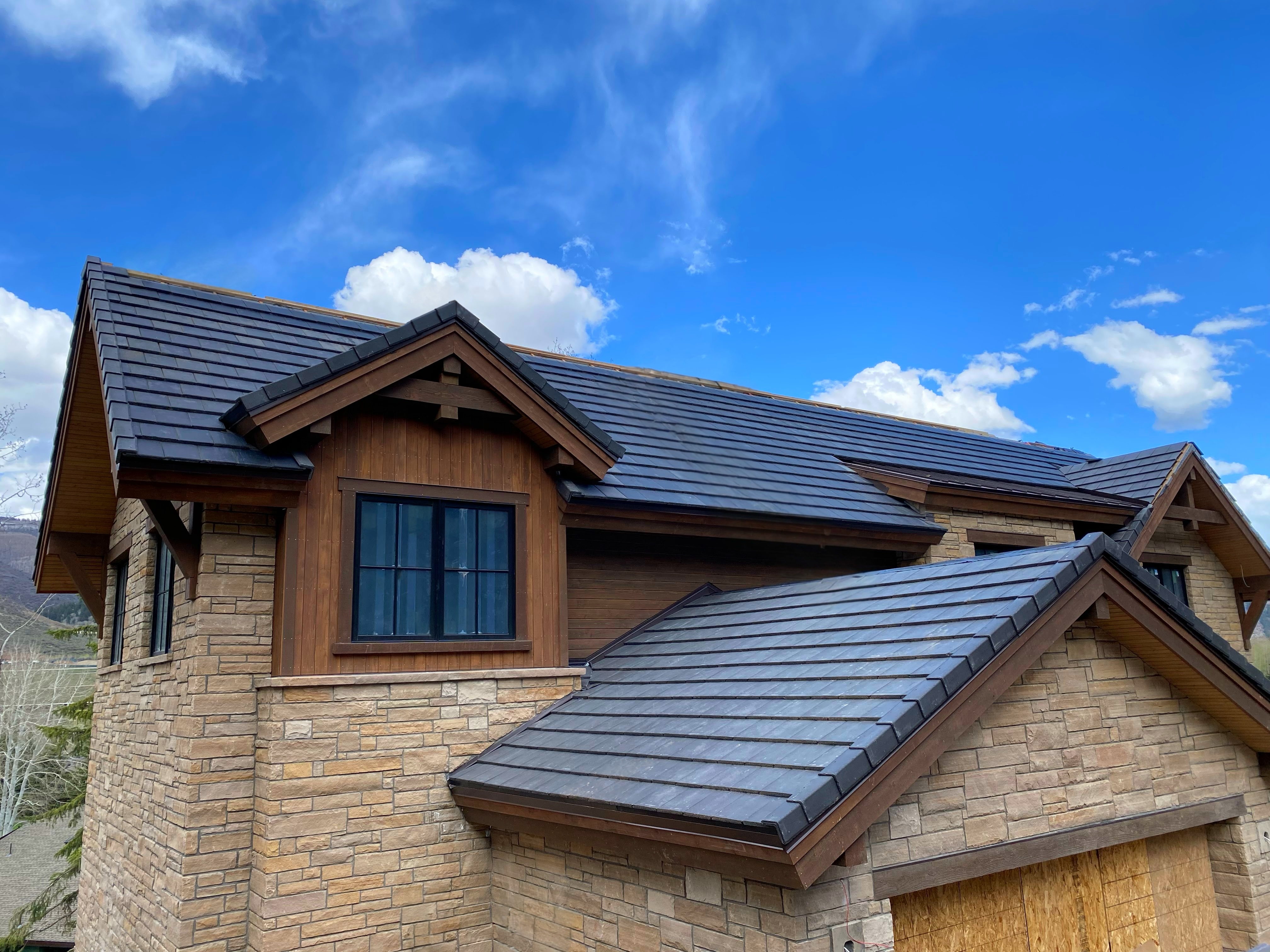
The term is used loosely in the market, so it is worth being precise. What Sternholt installs is not a solar shingle — a thin-film solar cell laminated to an asphalt substrate. It is a concrete solar tile, manufactured by casting the solar cell directly into the concrete during production.
Concrete tile roofs have defined premium residential architecture for generations. The profiles used on estate properties, custom new construction, and architecturally significant homes across the country are concrete. The material has a weight and permanence that asphalt cannot approach. It does not fade, crack, or lose its character the way lighter materials do. It improves with age in a way that a shingle never does.
The integrated solar version of this material is visually identical to non-solar concrete tile. The solar generation is invisible not because it is concealed behind something, but because it is inside the tile itself. From the street, from above, from any vantage point — it is a beautifully executed concrete tile roof.
Why This Matters for a Home That Has Been Done Right
A home in Westchester or Fairfield County, a property on the Connecticut shoreline, an estate in Bucks County or Monmouth County — these are homes where every surface has been considered. The finishes, the hardware, the landscaping, the exterior materials. The roof is the last surface to get this level of intention, and for too long there was no material that could deliver it at the level this category of home deserved.
The integrated concrete solar tile does. It is the only roofing material that provides premium architectural character and permanent energy generation in a single product with no visible indication of either function beyond what the roof simply looks like: exactly right.
Who This Is For
Not every home and not every homeowner is the right fit for this material. It is not the lowest-cost option. It is not the fastest to install. It requires a design process and an installation approach that takes more time and more coordination than a standard replacement.
But for the homeowner whose roof is within two to three years of needing replacement, who cares about the architectural character of their property, and who has either looked at panels and decided against them or never considered solar because nothing available matched the standard of their home — this is what they were waiting for.
Sternholt specifies and manages the installation of architecturally integrated concrete solar roof tiles across New York, New Jersey, Connecticut, and Pennsylvania. We work with a limited number of homeowners each year. If your roof is approaching replacement and you want to understand whether this material is right for your home, we are happy to have that conversation.